Much of the conversation surrounding climate change focuses on temperatures, infrastructure, technology, and economics. But behind every projection is a person who may lose a home, a livelihood, a community, or the ability to decide where they can go.
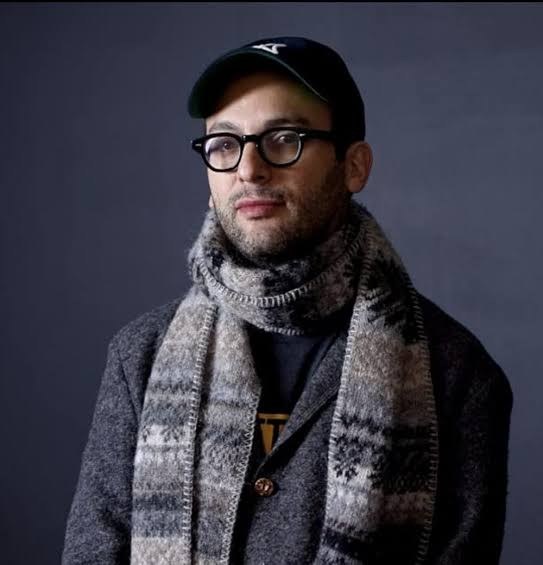
In his new film The Welcome Table, Emmy Award–winning filmmaker Josh Fox examines climate change through the people experiencing its consequences, and asks what kind of society we want to build as displacement accelerates around the world.
Fox is also known for Gasland, the Oscar-nominated 2010 film that brought fracking into the national conversation. The Welcome Table takes its title from James Baldwin’s unfinished final play, and it ends on a New Orleans levee, with survivors of floods, fires, and droughts sharing a single 1,000-foot table, set to the music of John Boutté.
Climate migration is often discussed as a projection: how many people will move, which regions will become uninhabitable, and what it will cost governments.
Fox approaches the question differently. His concern is what happens to people when movement is no longer a choice, and what happens to the societies receiving them.
That distinction matters for disaster science. Displacement is not simply an outcome of a hazard. It can become a cascading risk of its own, affecting housing, livelihoods, public health, infrastructure, social stability, and the ability of people to recover.
For Disaster Science, the conversation raised a larger question:
What happens when the systems built for yesterday’s climate can no longer support tomorrow’s world?
I sat down with Josh to discuss climate migration, disaster infrastructure, renewable energy, human rights, and the ethical choices that will shape the next era of disaster response.
This interview has been edited for length and clarity.
When movement is no longer a choice
Fox shot most of The Welcome Table alone, without the budget for a producer or camera operator, using a two-camera rig he built himself. In December 2022 he traveled to Cusco, Peru, just as nationwide protests erupted following the removal of President Pedro Castillo. Protesters shut down the train to Machu Picchu, blocked the roads, and took over the airport. Fox was stranded at 11,000 feet for nearly ten days.
“The only way I got out was by interviewing the leaders of the resistance,” he says. “I told them who I was, and they put me on a van to the airport. We were going around roadblocks that were on fire. I got one of the only flights out of Cusco to Lima. When we landed, people applauded. People were crying.”
Minutes later, sitting in a taxi with the window down, someone reached in and took his phone, with all of his footage from Peru on it.
“I learned a big lesson that day about what it is to be a migrant,” Fox says. “You’re in a foreign place. The climate itself doesn’t agree with your body. You have no power over whether you’re coming or going. And then they steal your story.”
They can steal the footage, but they can’t steal my story.
“Most people don’t understand what it is to have no control over where you can and can’t go. As Americans, we don’t think about it. I went through it in miniature, for ten days. There are people who come to this country and wait at the border for years, or sit in detention with no lawyer, while their families don’t know where they are.”
Climate migration is already here
For Fox, climate migration is not a scenario to be modeled decades from now. It is happening today, and the legal, financial, and humanitarian systems meant to protect people have not caught up.
Your film treats migration not simply as a consequence of climate change, but as a defining feature of the world climate change is creating. What are we missing when we talk about climate migration primarily as a future problem?
The projections from the IPCC and other scientists are that one out of every three people on the planet will likely be forced to migrate because of climate change, both within their own countries and across borders. And the impact will fall hardest on the Global South, on the very people who did not cause the problem. Poorer people around the world, by and large, don’t burn much oil, coal, or gas compared to the Global North. We know who’s causing the problem, and we know who’s being affected. It is a grave injustice.
First, we need refugee status for climate migrants. When the Refugee Convention was written in the 1950s, it was about the forms of persecution of that era, after World War II: race, religion, nationality, political opinion. If your country is dangerous to you for those reasons, you can seek asylum. But there is no refugee status for people displaced by climate. That statute has to change.
Second, the Global North has to pay for the damage. If you break it, you pay for it. One vehicle is a loss and damage fund, where richer nations, and hopefully the oil companies, pay to repair what they’ve destroyed. In a region of Africa hit by climate-driven drought, that could mean a modern water and irrigation system so people can keep farming.
Third, we have to stop building climate apartheid, a system where the rich can move anywhere and build bunkers, and everyone else is walled in. All over the world we’re seeing anti-immigrant rhetoric used to stoke fear, and walls going up as a result of the climate crisis. We have to do the opposite. We have to get really, really good at welcoming, because if we’re not on the move ourselves, we’re going to be tasked with welcoming those who are.
Climate change is not the weather. It is causing harm, and that harm is an injustice. We have to correct it as an injustice.
In New Orleans, we know very well what it was like for a huge part of the population to be displaced, living in FEMA trailers or moving to Houston, because there wasn’t enough care and aid for people to stay and keep the culture. We have to build mutual aid for people displaced inside our own countries, and across borders too.
The future, even a climate-changed future, doesn’t have to be so bad if we base it on the things climate can’t change: love, compassion, generosity, democracy, working together.
Gasland was about one place. The Welcome Table spans six continents. What did going global show you?
The film looks at famine, flood, fire, and landslides, but also at the social side. The IPCC lays out 127 different impacts that climate change will make worse. It makes domestic violence worse. It makes gang activity, terrorism, and failed states worse. It contributes to war.
Climate change ratchets up all of our social ills, because it’s harder to recover, and those willing to do violence get an opening as structures fall apart. In Guatemala, farmers who can’t grow crops anymore have to migrate into the city just to survive, and there they’re preyed upon by gangs. Poverty goes up, food insecurity goes up, domestic violence goes up.
We have to figure out how not to descend into Mad Max chaos. We need a structure based on human rights that can deal with this crisis as it gets worse, and right now we don’t have one. A wall on its side can be a table. We need fewer walls and more places where people come together.
Every fraction of a degree matters
If displacement is already underway, is there still time to prevent the worst of it? Fox holds two truths at once: much of the damage is locked in, and every bit of warming we avoid still changes who has to leave.
The disaster field is built around response, but the science tells us some displacement is already locked in. Is the field facing a permanent shift toward managing displacement, or is there still a prevention window worth fighting for?
Every fraction of a degree we can prevent is worth fighting for. There aren’t just big tipping points; there are micro tipping points. The point where the forest catches fire instead of not catching fire. Where the hillside slides because there’s too much rain. Where the roof flies off instead of staying on. Where a family loses its livelihood and has to move. Every lump of coal or pump of gas we don’t burn matters.
The good news is that we have the technology. We could have gotten off fossil fuels twenty years ago. Technology has moved forward in every other part of our lives, and energy has been held back by the power of the fossil fuel industry.
But a lot of impacts are coming anyway. This is the coolest summer for the rest of our lives. There’s excess heat stored in the ocean, and the carbon already in the atmosphere will last for centuries. We’re going to navigate the most intense period of change any civilization has ever faced, and the largest mass migration in human history.
We’ve already migrated to a different planet, and it’s going to be increasingly hostile to civilization. We have to rebuild everything for a climate-changed Earth. That’s a humanitarian crisis, and it’s also an opening to build something better, because whoever builds truly resilient systems is who builds the new world. It’s a political question, a science question, a human rights question, and a cultural question. We can either retreat into bunkers, which 99.9 percent of people will never have, or we can build something based on democracy, human rights, and sharing rather than hoarding.
Who gets to build the future?
Rebuilding for a changed climate may be the largest undertaking in human history. The question Fox keeps returning to is who it will be built for, and by whom.
Fox has taken the film well beyond theaters. It premiered at the European Parliament and has screened in Congress and state houses. For the people in the disaster field, though, he has a more direct message.
“If you’re coming from a position of responsibility or influence, the simple truth is that we have to build a new world,” he says. “That’s the greatest moral undertaking of our time. Everything in our civilization was built for a different climate: less rain, less fire, fewer landslides. After a disaster, the old structures that are brittle and falling down have to be replaced. The people who figure out how to do that resiliently are going to build the future.”
Continuing to build fossil fuels and non-resilient structures is like setting the pins back up in the bowling alley, just to have them knocked down again.
“Organizations have to be trained in disaster relief,” he adds, “but they also have to be trained in ethics. In a disaster, all of our best qualities have the chance to come out, and so do the worst. You have to work from a framework of ethics.”
You’ve spent years in the field documenting disasters. After everything you’ve seen, are you hopeful? And if so, what exactly are you hopeful about?
I’m always inspired by the depths of love and understanding human beings are capable of. I spend a lot of time in disasters, and when I go to disasters, I see the best of humanity emerge. I see the resilience, the character, the will to generosity. That’s what I chose to emphasize in The Welcome Table. It tries to model a future that isn’t based on greed, racism, and violence, and when you put that in front of people, they respond to it.
If there are sides, our side is a lot more fun. It’s a lot more fun to be doing the second line, dancing, singing, eating together, and learning about each other. I think our numbers are greater. Most people want to be decent to each other. They want to share, to be generous, to sacrifice for their communities. I just hope we’re organized enough to act on it.
Build tables, not walls
Asked what he would tell elected officials, Fox came back to the image at the center of his film.
What’s the one thing you wish every elected official understood about climate migration?
That migration is going to happen, and we have to build programs to welcome and take care of people. Build tables, not walls.
The Universal Declaration of Human Rights says you have the right to move and the right to seek asylum. It also says that when you move to another country, you observe its laws, and that has to be part of how people settle in, because we fought hard for our civil rights. At the same time, every culture on this planet is a piece of a giant jigsaw puzzle. Everyone has something to teach and something to learn.
Second, we need to move off fossil fuels. Renewable energy is inherently local. Local microgrids are resilient, and we have enough wind and sun to power everything right now. It largely pays for itself when you consider what we spend defending oil tankers and pipelines around the world. And we have to recognize that migrants, especially in the United States, are a fundamental part of the economy.
In the film, we talk about how they tried to keep Italians out of New York a hundred years ago. They drew us as rats with knives in our teeth. Can you imagine New York without pizza? Every migrant brings something brilliant like that. The next great cultural innovation in our food, our cities, and our music is coming from the people we’re detaining right now.
Most people go to work, go to church, go to concerts. They want to live in peace, raise their kids, and share. Sharing is the fundamental thing that makes us human. We share food around the table, we share stories, we share music.
Climate migration is not simply a future consequence of climate change. It is a question of infrastructure, human rights, economics, ethics, and how we choose to rebuild the world.
Josh repeatedly connects those ideas: climate displacement, disaster recovery, renewable infrastructure, mutual aid, business ethics, and the choice between building walls or building systems that can welcome and support people.
The question is no longer whether climate change will force people to move. It is what we will build when they do.
Walls can keep people out. Tables can bring people together.
For Fox, that distinction is more than a metaphor. It is a choice about what kind of world we intend to build, and whether the systems we create for a changing climate will protect only those who can afford to escape it, or help people move, recover, and remain connected when the places they call home begin to change.
That may be the real challenge of the next era of disaster management: not simply preparing for what is coming, but deciding who gets to shape what comes next.
The Welcome Table is streaming now on HBO Max. To watch the film or host a screening in your community, visit thewelcometablefilm.com. Views expressed are those of the interviewee.